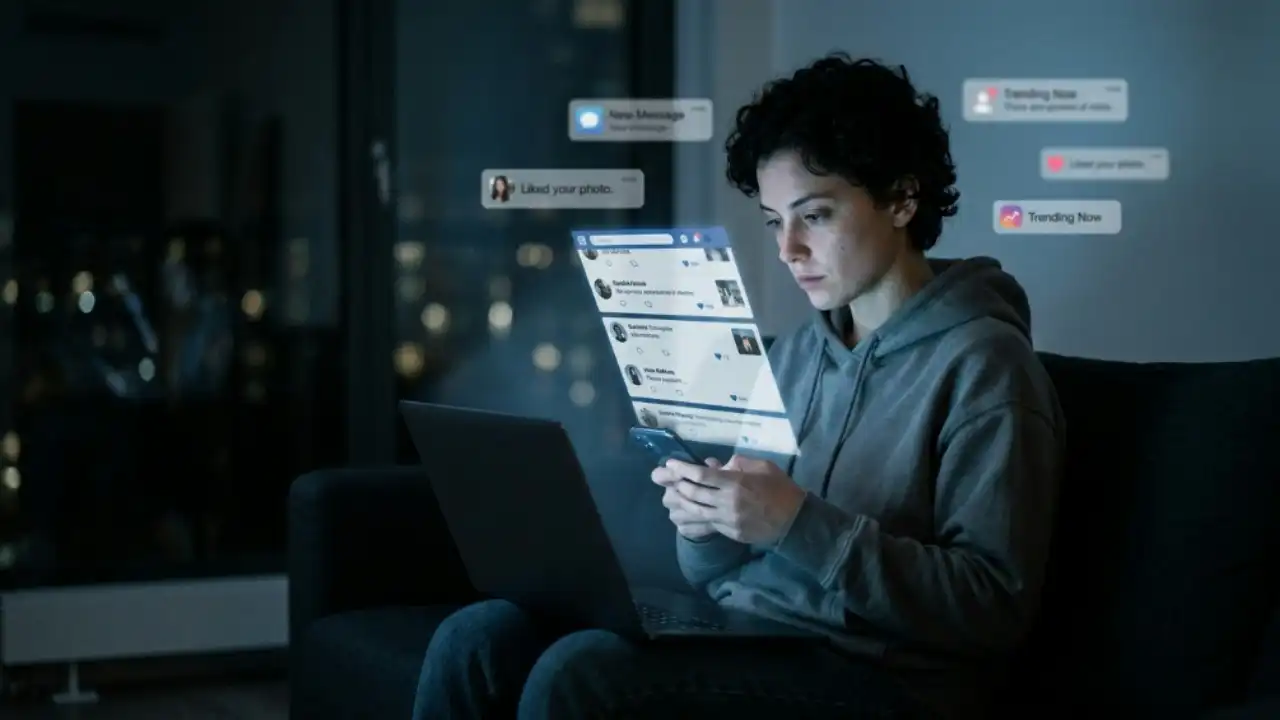
Most people notice how difficult it has become to stay focused on one thing for a long time. A person may open a social media app for two minutes and remain there for nearly an hour without realizing it. Even after watching dozens of short videos, the brain still wants “just one more” piece of content.
Behavioral psychology suggests that this pattern connects to how the brain reacts to novelty. Human attention naturally moves toward unfamiliar information because new stimuli historically helped people survive changing environments. The brain evolved to notice movement, uncertainty, and unexpected events more quickly than it does repetitive information.

Modern digital platforms use this tendency very effectively. Social media feeds, short videos, notifications, and trending topics constantly introduce fresh stimulation. Instead of allowing the brain to settle, online systems keep attention active by continuously offering something new, emotional, or unpredictable.
Table of Contents
Why New Information Feels Rewarding
The brain’s reward system plays a major role in online behavior. Many researchers now believe that dopamine links more closely to anticipation than to pleasure itself. In simple terms, the brain becomes excited by the possibility of a reward, not just by the reward itself.
This explains why scrolling often feels difficult to stop. Each swipe creates uncertainty about what might appear next. A funny video, breaking news story, emotional post, or surprising image may appear at any moment. The brain remains engaged because the next reward always feels possible.

Online platforms strengthen this cycle by rapidly stimulating it. In the real world, novelty appears slowly. Online, hundreds of new images, videos, and headlines can appear within minutes. This creates repeated bursts of attention and anticipation, keeping users mentally active for long periods.
Several digital features increase novelty-driven engagement:
- Infinite scrolling removes natural stopping points.
- Notifications interrupt attention with unpredictable updates.
- Recommendation algorithms continuously present new content.
- Short-form videos deliver fast emotional stimulation.
How Online Platforms Train Attention
The attention economy shapes the design of the modern internet. Platforms compete to keep users engaged for as long as possible because longer engagement usually means more advertising revenue, more interaction, and stronger platform growth.

To achieve these goals, algorithms carefully study behavioral patterns. They track what people watch, skip, like, replay, or search for. Over time, platforms build highly personalized content feeds designed to hold attention more effectively than traditional media.
This creates a conditioning process inside the brain. When digital stimulation repeatedly produces emotional rewards, the brain begins to expect them automatically. Eventually, checking a phone can become less of a conscious decision and more of a learned reflex.
Many people now unlock their phones during tiny moments of boredom or discomfort without thinking. Waiting in a queue, sitting quietly, or pausing between tasks often triggers automatic checking behavior because the brain has learned to associate online novelty with quick emotional stimulation.
Why Real Life Starts Feeling Slower
One major psychological effect of constant online novelty is reduced tolerance for slower activities. Reading long articles, studying, deep conversations, or focused work may begin to feel mentally exhausting compared to rapid digital stimulation.
The brain adapts to the speed of its environment. When attention constantly shifts between videos, messages, news, and notifications, slower tasks can start feeling less rewarding. This does not necessarily mean a person has become lazy. Often, the brain has simply adjusted to high-frequency stimulation.
Social media also combines novelty with social validation. Likes, comments, reactions, and trending discussions activate emotional systems connected to belonging and approval. Human beings are naturally sensitive to social feedback, which makes digital platforms even harder to ignore.
Over time, attention becomes fragmented. Instead of focusing deeply on one activity, the brain repeatedly switches between unrelated stimuli. Research increasingly links this pattern to reduced concentration, mental fatigue, and lower cognitive endurance during demanding tasks.
The Reinforcement Cycle Behind Digital Craving
Many online behaviors continue because they temporarily reduce emotional discomfort. Stress, boredom, uncertainty, loneliness, or mental fatigue often push people toward fast digital stimulation. The brain learns that online novelty can provide quick emotional relief.
This creates a reinforcement cycle that gradually strengthens over time:
- A person experiences boredom, stress, or discomfort.
- They seek quick stimulation online.
- Novel content creates temporary emotional relief.
- The brain remembers the reward experience.
- The same behavior repeats during future discomfort.
The cycle becomes powerful because the emotional reward arrives immediately, while the negative effects appear slowly. A person may feel temporary stimulation now, while attention problems, overstimulation, or mental fatigue develop later and less noticeably.
Behavioral psychologists often describe this as short-term reward reinforcement. The brain prioritizes immediate emotional relief even when long-term consequences may not be helpful. This same mechanism influences many human habits beyond digital behavior.
What Research Suggests About Digital Novelty
Researchers studying digital psychology increasingly believe modern technology interacts directly with ancient survival systems in the brain. Humans evolved in environments where noticing new information improved survival chances. Online systems now amplify that mechanism continuously.
Studies in behavioral neuroscience suggest unpredictable rewards are especially effective at maintaining attention. Predictable experiences quickly become boring, while uncertain rewards keep the brain engaged longer. This is one reason random notifications and endless scrolling feel unusually difficult to resist.
Several modern behavioral patterns are increasingly linked to excessive novelty exposure online:
| Digital Behavior | Psychological Effect |
|---|---|
| Constant scrolling | Reduced sustained focus |
| Frequent notifications | Continuous mental interruption |
| Fast content switching | Attention fragmentation |
| Endless recommendations | Increased cognitive overstimulation |
| Heavy short-video use | Lower patience for slower tasks |
Researchers also warn that constant stimulation reduces cognitive recovery time. The brain needs quieter periods for memory processing, emotional regulation, and mental restoration. Continuous novelty can reduce these slower mental states that are important for balanced thinking.
Importantly, novelty itself is not harmful. Curiosity, exploration, and learning remain essential human strengths. Problems emerge when digital systems deliver nonstop stimulation at levels the brain did not evolve to handle effectively.
Why Emotional States Influence Online Behavior
Online novelty is not only about entertainment. Emotional regulation also plays a major role in digital habits. Many people turn to screens during moments of stress, anxiety, frustration, or emotional exhaustion because novelty can briefly interrupt uncomfortable thoughts.
This is why digital behavior often becomes stronger during difficult periods of life. Emotional uncertainty increases the brain’s desire for distraction, stimulation, or quick rewards. The internet offers immediate access to all three.
Over time, however, constant distraction may weaken emotional tolerance. Quiet thinking, boredom, and mental stillness become harder to manage because the brain grows accustomed to continuous stimulation. Yet these slower mental states are important for reflection, creativity, and emotional balance.
This issue is becoming more important among younger age groups raised in highly digital environments. Constant exposure to fast-moving content during key developmental years may shape attention patterns, emotional regulation, and patience differently than in earlier generations.
Building Healthier Digital Attention
Most experts agree that overcoming digital overstimulation is not simply about stronger discipline. The brain naturally seeks stimulation, especially during stress or mental fatigue. Sustainable behavioral change usually depends more on the environment and awareness than pure willpower.
Reducing unnecessary notifications can significantly reduce mental interruptions. Spending more time on longer-form activities like reading, writing, or focused work may also help rebuild sustained attention capacity over time.
Awareness of emotional triggers is equally important. Many people seek novelty automatically during boredom or discomfort without noticing the emotional reason behind the behavior. Recognizing those patterns can gradually reduce automatic digital habits.
The goal is not to reject technology completely. Online platforms provide communication, learning, entertainment, and useful information. The challenge is preventing constant novelty from dominating attention so strongly that slower, deeper forms of thinking become uncomfortable.
The Brain Was Not Built for Endless Stimulation
Human attention evolved for survival, exploration, and meaningful learning. It did not evolve for the infinite streams of algorithmically optimized stimulation available every second of the day. Modern digital systems leverage natural novelty-seeking tendencies that once helped humans adapt to uncertain environments.
When viewed through a behavioral psychology lens, online craving becomes easier to understand. The brain is responding predictably to systems specifically designed to capture attention through uncertainty, emotional stimulation, and rapid rewards.
Understanding this mechanism matters because attention increasingly shapes modern life. The ability to focus deeply, tolerate stillness, and think without constant interruption may become one of the most valuable psychological skills in the digital age.