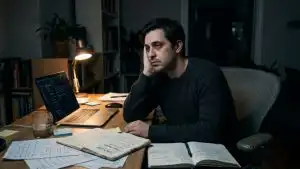
People usually think procrastination happens because someone is lazy or poorly disciplined. But behavioral psychology shows that long-term stress can strongly affect how people think, focus, and respond to difficult tasks. Many people delay work not because they do not care, but because their brains become overloaded by emotional pressure.
Chronic stress changes how the nervous system reacts to effort, uncertainty, and mental discomfort. Tasks that once felt manageable may suddenly feel emotionally exhausting. Even starting small responsibilities can create mental resistance when stress levels remain high for weeks or months.

This is why procrastination often increases during stressful periods, such as financial pressure, burnout, academic overload, or emotional conflict. The brain slowly begins to prioritize short-term emotional relief over long-term goals. Over time, avoidance becomes a learned behavioral pattern rather than an occasional habit.
Table of Contents
Why Stress Changes Human Behavior
The human brain is designed to handle short bursts of stress. During temporary stress, attention and alertness may actually improve. Chronic stress works differently because the nervous system stays active for too long without enough recovery.
When stress becomes constant, the brain begins to conserve mental energy. Activities that require focus, decision-making, or emotional effort begin to feel heavier than usual. This especially affects tasks connected to deadlines, uncertainty, or performance pressure.

Stress also weakens executive functioning, which includes planning, impulse control, emotional regulation, and sustained attention. As these systems become strained, avoidance behaviors become more attractive because they provide quick emotional relief.
Several stress-related patterns commonly increase procrastination:
- Mental exhaustion during task initiation
- Increased fear of mistakes or failure
- Difficulty focusing for long periods
- Stronger urge for instant comfort or distraction
- Reduced tolerance for frustration or uncertainty
These reactions are not random. They reflect how the brain adapts under long-term emotional pressure. A stressed nervous system naturally tries to reduce discomfort whenever possible.
Why Starting Tasks Feels Harder Under Stress

One of the most significant effects of chronic stress is difficulty starting tasks. Many people can still think clearly about responsibilities yet feel mentally blocked when trying to begin. This creates frustration because intention and action stop matching.
Under stress, the brain often exaggerates the emotional difficulty of work. A simple email, study session, or unfinished project may start feeling overwhelming before any real effort even begins. The mind anticipates discomfort and reacts with resistance.
This creates a cycle in which people spend hours worrying about tasks rather than completing them. The person is not fully relaxing during procrastination either. They remain mentally attached to unfinished responsibilities, which increases guilt and emotional fatigue.
Modern digital environments exacerbate this problem. Constant notifications, multitasking, and information overload reduce mental recovery. As attention becomes fragmented, deep work starts feeling more psychologically demanding.
The Reinforcement Cycle Behind Procrastination
Procrastination becomes powerful because it temporarily reduces stress. When someone avoids a difficult task, emotional discomfort decreases temporarily. That relief teaches the brain that avoidance works.
For example, a person may feel anxious about starting an important report. Instead of beginning, they scroll social media or watch videos. The moment attention shifts away from the stressful task, anxiety reduces slightly. The brain remembers this emotional relief.
Over time, the nervous system begins repeating the same pattern automatically. Stress triggers avoidance; avoidance temporarily reduces discomfort, and the behavior becomes reinforced. This pattern is one reason procrastination becomes harder to break during burnout or chronic anxiety.
The cycle usually develops in predictable stages:
- A stressful task creates emotional pressure
- The brain anticipates discomfort or failure
- Avoidance provides short-term mental relief
- Guilt and anxiety return later with more intensity
- Increased stress makes future procrastination easier
This cycle slowly trains the brain to associate difficult work with emotional discomfort. Eventually, procrastination stops feeling like a choice and becomes an automatic stress response.
How Emotional Regulation Shapes Avoidance
Behavioral psychology increasingly views procrastination as an emotional regulation issue rather than a time-management problem. People often avoid tasks because they want to escape the uncomfortable emotions associated with them.
Chronic stress reduces emotional resilience. Small setbacks begin feeling larger, criticism feels heavier, and uncertainty becomes harder to tolerate. As a result, many people unconsciously delay tasks that trigger emotional discomfort.
Perfectionism also becomes stronger under stress. A person may avoid starting work because they fear poor results, judgment, or failure. The brain treats these possibilities as emotional threats, even when the actual risk is small.
Stress also affects reward processing. Long-term goals begin to feel less motivating compared to immediate comfort. This is why stressed individuals often turn to low-effort stimulation, such as short videos, endless scrolling, repetitive checking, or passive entertainment.
These behaviors are not simply distractions. In many cases, they function as emotional escape mechanisms for an overloaded nervous system.
Why Modern Life Makes the Problem Worse
Modern environments expose people to continuous psychological stimulation. Work pressure, social comparison, financial stress, and digital overload keep the nervous system active for long periods without proper recovery.
Many people now spend entire days switching between screens, notifications, conversations, and unfinished tasks. This constant mental fragmentation reduces attentional endurance and weakens deep focus over time.
Behavioral psychology research increasingly connects digital overstimulation with increased procrastination. The brain adapts to fast rewards and constant novelty, making slower, effortful tasks feel less appealing.
This becomes especially visible in work-from-home environments and highly competitive academic systems. People remain mentally connected to responsibilities even during breaks, preventing proper emotional recovery.
As stress accumulates, difficult tasks start feeling emotionally expensive. At the same time, quick forms of entertainment become psychologically easier to repeat. This imbalance gradually increases habitual avoidance behavior.
What Research Suggests About Stress and Procrastination
Researchers increasingly believe procrastination is closely connected to emotional stress systems. Studies often show that chronic stress affects attention control, decision-making, working memory, and emotional regulation, all of which influence productivity and behavior.
Stress hormones may also affect motivation systems linked to reward anticipation. Under chronic stress, the brain often prioritizes immediate emotional comfort over delayed long-term rewards. This makes procrastination psychologically easier.
Research also shows that procrastination itself can become a source of stress. Delayed work creates guilt, anxiety, and mental pressure, which then increases emotional exhaustion. The person becomes trapped in a repeating cycle of stress avoidance.
Behavioral psychologists now connect procrastination with several overlapping psychological factors:
- Emotional avoidance
- Fear of failure
- Cognitive overload
- Burnout and mental fatigue
- Reduced frustration tolerance
This explains why procrastination is rarely solved through pressure or self-criticism alone. In many cases, stress reduction and emotional regulation are more important than motivational intensity.
Why Understanding This Pattern Matters
Many people respond to procrastination by blaming themselves. Unfortunately, guilt and harsh self-judgment often increase emotional pressure, which strengthens avoidance behavior even further.
A more useful approach is understanding how stress changes human behavior. When people recognize that chronic stress affects attention, motivation, and emotional regulation, procrastination becomes easier to understand psychologically.
This does not mean avoidance is harmless or unavoidable. It means the behavior often develops from real cognitive and emotional strain rather than simple irresponsibility. Understanding the mechanism allows people to reduce emotional friction rather than increase mental pressure.
Human behavior often appears irrational on the surface. But when procrastination is viewed through the lens of stress psychology, emotional regulation, and behavioral reinforcement, the pattern becomes far more understandable.