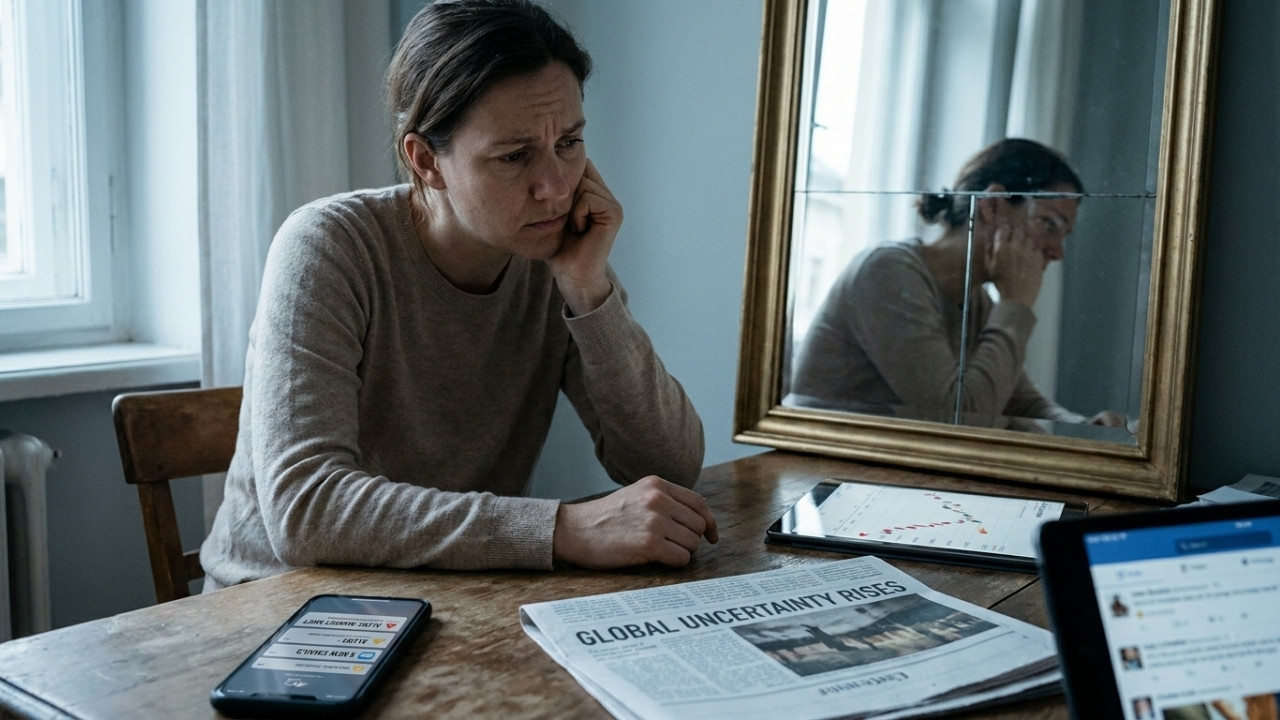
Most people believe their daily decisions are based on logic and conscious thinking. In reality, the brain often relies on mental shortcuts that simplify information processing. These shortcuts, known as cognitive biases, help people make fast judgments but can also distort perception without obvious awareness.
Behavioral psychology suggests the human brain prioritizes efficiency over complete accuracy. Instead of analyzing every detail objectively, people frequently interpret situations through emotional reactions, previous experiences, and familiar assumptions. This process becomes even stronger during stress, uncertainty, or information overload.

Modern environments constantly intensify these patterns. Social media feeds, rapid news cycles, advertisements, and digital distractions expose the brain to endless emotional stimulation. Over time, cognitive biases begin to shape financial choices, relationships, political opinions, workplace behavior, and even personal habits in subtle yet powerful ways.
Table of Contents
Why the Brain Depends on Cognitive Biases
The brain processes massive amounts of information every second. To avoid mental exhaustion, it develops automatic filtering systems that reduce cognitive effort. These systems allow people to react quickly, but they also increase the likelihood of biased thinking.
From an evolutionary perspective, fast decision-making was often necessary for survival. Early humans benefited from recognizing familiar threats, trusting repeated patterns, and responding emotionally to danger signals. Although modern life is completely unique, the brain still operates using many of the same efficiency-based mechanisms.

Research in cognitive psychology shows that emotional comfort strongly influences judgment. People are more likely to accept information that feels familiar or psychologically safe, even when contradictory evidence exists. This explains why human decision-making is often emotionally filtered before it becomes consciously rationalized.
The Biases That Shape Daily Behavior
Certain cognitive biases recur across everyday situations because they directly influence perception, memory, and emotional interpretation. These biases quietly affect how people process information and make decisions throughout the day.
Common cognitive biases include:
- Confirmation bias, where people favor information that supports existing beliefs.
- Negativity bias, where negative experiences feel psychologically stronger than positive ones.
- Availability bias, where emotionally memorable events appear more common than they actually are.
- Optimism bias, where individuals underestimate risks and overestimate positive outcomes.

These biases rarely operate independently. A person consuming emotionally charged online content may simultaneously experience negativity bias, confirmation bias, and distorted risk perception. Because these reactions feel natural, people often mistake biased thinking for objective reasoning.
The influence of these biases becomes especially powerful in digital environments. Algorithms repeatedly expose users to familiar viewpoints and emotionally stimulating material, reinforcing automatic thought patterns and narrowing behavioral flexibility over time.
How Cognitive Biases Affect Real-Life Decisions
Cognitive biases strongly influence workplace behavior and professional judgment. Managers may unconsciously favor employees who align with existing assumptions, while teams often resist unfamiliar ideas because familiarity feels psychologically safer than uncertainty.
Emotional thinking also shapes financial decisions. Many individuals continue to invest time or money into failing situations simply because they feel emotionally uncomfortable abandoning them. This pattern, known as the sunk cost effect, frequently affects careers, business decisions, and long-term commitments.
Biased interpretation similarly influences relationships. People tend to notice behaviors that confirm existing emotional expectations while overlooking contradictory evidence. Someone expecting rejection may unconsciously focus more on criticism than support, reinforcing distorted interpersonal perceptions.
When Biases Become Self-Reinforcing
Cognitive biases persist because they often reduce short-term psychological discomfort. The brain naturally prefers certainty, predictability, and emotional consistency. As a result, familiar interpretations frequently feel more trustworthy than unfamiliar ones.
Confirmation bias becomes stronger through repetition. When individuals repeatedly consume information that supports their existing beliefs, those beliefs become increasingly accurate and emotionally secure. Contradictory perspectives may trigger discomfort or defensive reactions rather than reflection.
Several mechanisms reinforce cognitive bias patterns over time:
- Emotional relief from familiar conclusions.
- Reduced mental effort through automatic thinking.
- Social validation from like-minded environments.
- Digital algorithms repeat similar content.
- Stress increases dependence on fast judgments.
Behavioral researchers also note that repeated exposure can, in itself, increase perceived truthfulness. Familiar ideas often feel more believable simply because the brain processes repeated information more easily. In modern media systems, this effect significantly shapes public opinion and personal behavior.
What Research Reveals About Human Judgment
Modern behavioral psychology increasingly suggests that human reasoning is influenced by two competing systems: fast automatic thinking and slower reflective thinking. Automatic processing is efficient, but it becomes more biased under emotional stress or cognitive overload.
Neuroscience research indicates that emotionally rewarding information activates brain systems that mediate psychological reinforcement. People often experience satisfaction when encountering information that confirms existing beliefs because consistency reduces internal cognitive tension.
Studies on attention and memory also show that people remember emotionally intense experiences more vividly than neutral events. This contributes to a distorted perception, in which dramatic or fear-based situations appear statistically larger than they truly are. Media environments frequently amplify this effect by prioritizing emotionally engaging content.
Researchers increasingly argue that biased thinking is not necessarily irrational behavior. Instead, it reflects how the human brain balances emotional regulation, cognitive efficiency, and environmental adaptation under conditions of limited attention and constant stimulation.
Why Cognitive Biases Matter More Today
Modern life creates conditions where cognitive biases operate more aggressively than in previous generations. People are exposed to continuous notifications, personalized content systems, emotional advertising, and endless streams of information competing for attention.
Digital platforms are specifically designed to maximize engagement rather than balanced understanding. Emotionally stimulating content spreads faster because the brain naturally reacts more strongly to novelty, conflict, fear, and social validation. This increases impulsive interpretation and reduces reflective thinking.
The result is a society where attention fragmentation, emotional overload, and polarized thinking become increasingly common. Individuals often believe they are making independent decisions, but repeated exposure patterns and algorithm-driven reinforcement systems shape their perceptions.
Understanding Biases More Clearly
Recognizing cognitive biases does not remove them completely because the brain will always depend partly on mental shortcuts. However, awareness can reduce automatic reactions and improve decision-making quality over time.
One important behavioral insight is that slowing down decisions often improves judgment. Reflection interrupts emotional impulsivity and allows the brain to evaluate alternative perspectives more carefully. Even brief pauses can weaken automatic reinforcement patterns.
Another useful perspective is understanding that human perception is naturally selective rather than fully objective. People interpret reality through emotional experiences, social environments, memory systems, and attentional focus. Recognizing this limitation encourages more flexible and psychologically balanced thinking.
The Deeper Influence of Cognitive Biases
Many daily behaviors that appear rational on the surface are heavily shaped by subconscious mental filtering. Cognitive biases influence how people interpret information, respond emotionally, remember experiences, and evaluate risk in ordinary situations.
These patterns become especially powerful in modern environments filled with overstimulation, emotional media systems, and constant digital engagement. Under cognitive pressure, the brain increasingly favors fast emotional interpretation over slower analytical reasoning.
Understanding cognitive biases is ultimately less about eliminating mistakes and more about understanding human behavior more realistically. Greater awareness creates opportunities for more reflective thinking, healthier judgment, and better long-term decision-making in everyday life.