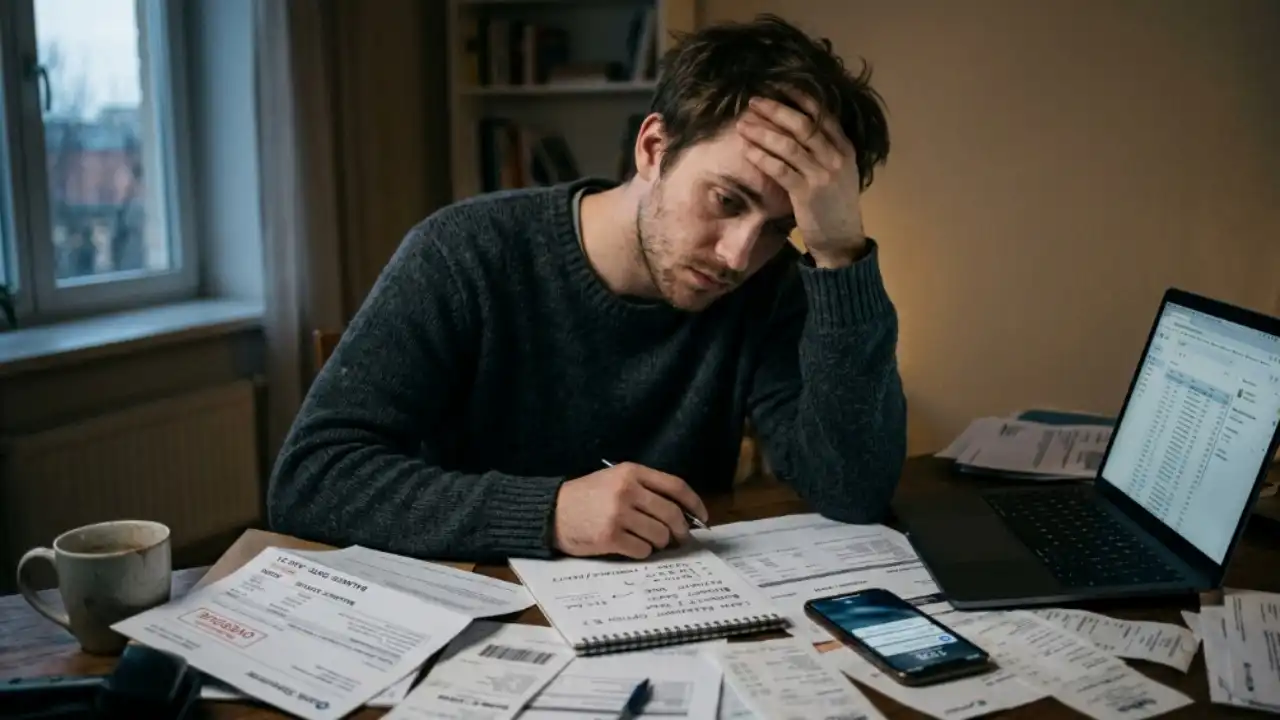
Stress does not always make people careful. In many real situations, it pushes them toward faster, sharper, and sometimes riskier choices. A stressed person may spend impulsively, drive aggressively, accept an uncertain deal, argue without thinking, or make a major decision just to escape pressure.
This feels confusing because stress is usually linked with fear and protection. But the stressed brain does not simply look for safety. It often looks for quick relief, control, and certainty. That shift can make risky choices feel more attractive than slow, careful thinking.

Risk-taking under stress is not random. It usually reflects a brain trying to reduce discomfort as quickly as possible. The risky choice may not be logically better, but in that moment, it may feel emotionally easier.
Table of Contents
Why Stress Changes the Way People Decide
Stress activates the body’s threat-response system. Heart rate rises, attention narrows, and the brain starts treating the situation as urgent. This response is useful during real danger, but modern stress often comes from deadlines, money problems, exams, social conflict, job pressure, or uncertainty.
Under stress, the brain gives more importance to immediate outcomes. A quick reward, fast escape, or instant sense of control can feel more valuable than long-term safety. Research on stress and decision-making shows that stress can affect valuation, learning, and the way people weigh possible gains and losses.

The prefrontal cortex, which supports planning, impulse control, and future thinking, can become less efficient under intense pressure. At the same time, emotional and reward-related systems may become more influential. This does not remove responsibility, but it changes the mental conditions under which decisions are made.
The Brain Starts Looking for Relief
One of the strongest links between stress and risk-taking is relief-seeking. Stress creates internal pressure, and the brain wants that pressure to drop. A risky action can offer quick emotional release, even when it creates bigger problems later.
This is why people often take risks when they feel trapped or overwhelmed. The person may not be chasing danger itself. They may be chasing a change in feeling. A sudden purchase, an angry message, a risky investment, or a careless shortcut may all provide a short burst of relief.

Several common risk patterns appear during stress:
- Spending money impulsively to feel comfort or control.
- Taking financial risks when uncertainty becomes emotionally heavy.
- Driving aggressively after anger, frustration, or time pressure.
- Overeating, drinking, smoking, or using substances for quick relief.
- Making relationship decisions during fear, rejection, or anger.
- Ignoring health or safety advice because the present moment feels too demanding.
How Stress Distorts Risk Perception
Risk-taking depends not only on the actual danger but also on how the brain perceives it. Stress can distort this reading. Some people become more cautious and avoid everything. Others become more willing to take risks because action feels better than waiting.
This difference matters because stress does not create one fixed response. It interacts with personality, past experience, age, sleep, social pressure, and the type of risk involved. A person may avoid emotional risk but take financial risk or avoid physical danger but make impulsive social decisions.
Research on risk and reward under stress suggests that stress can increase the importance of reward signals. In simple terms, the brain may start paying more attention to what can be gained quickly and less attention to what may go wrong later.
Why Uncertainty Makes Risk More Tempting
Uncertainty is one of the most stressful mental states. The brain prefers predictable outcomes because predictability helps it prepare. When the future feels unclear, even a risky action can feel better than doing nothing.
This is why stressed people sometimes make sudden decisions. A person worried about money may chase a high-risk opportunity. Someone unsure about a relationship may create conflict just to force clarity. A worker under pressure may quit suddenly because staying in uncertainty feels unbearable.
The risky decision may not be fully planned. It may be an attempt to end mental tension. In these moments, action feels like control, even when the action itself increases future risk.
Acute Stress and Chronic Stress Are Not the Same
Acute stress is short-term pressure, such as an argument, an exam, an emergency, or a deadline. It can make decisions faster and narrower. The person may act before thinking through all possible outcomes.
Chronic stress is long-lasting pressure, such as debt, job insecurity, caregiving burden, burnout, or repeated conflict. It can wear down self-control and reduce mental flexibility. Over time, the brain may become more sensitive to quick rewards and quick escape.
The difference can be seen clearly:
| Type of Stress | How It Affects Risk-Taking |
|---|---|
| Acute stress | Pushes quick, narrow, urgent decisions |
| Chronic stress | Weakens patience and increases emotional coping |
| Mild stress | May sharpen focus in some situations |
| Severe stress | Often reduces careful evaluation |
When Risk Becomes a Control Strategy
Risk is not always about thrill-seeking. Many people take risks under stress because the action gives them a temporary sense of control. Stress often creates helplessness, and a bold move can feel like taking power back.
This is psychologically important. A person may understand the danger but still prefer action over helplessness. The risky choice becomes attractive because it says, “At least I am doing something.” That feeling can be powerful when the person feels cornered.
This pattern appears in money decisions, workplace choices, emotional conversations, and personal habits. The risk is not always chosen because it is smart. It is chosen because stillness feels worse.
The Reinforcement Loop Behind Stress-Based Risk
Risk-taking can become a repeated pattern when it brings short-term relief. If a risky action reduces stress even briefly, the brain may remember it as useful. The behavior does not need to permanently solve the problem. It only needs to reduce discomfort now.
This creates a loop where stress feeds the same risky response again and again. The person may later regret the decision, but the brain remembers the earlier relief more strongly than the delayed cost.
The loop often works like this:
- Stress rises and creates emotional discomfort.
- A risky action offers quick relief, reward, or escape.
- The brain feels a temporary release.
- The long-term cost appears later.
- New stress begins, and the same behavior becomes more likely.
Why Some People Take More Risks Under Stress
People do not respond to stress in the same way. A person’s history shapes how they deal with pressure. Someone who grew up around instability may become more sensitive to uncertainty. Someone used to high-pressure environments may act quickly because delay feels unsafe.
Personality also plays a role. Sensation-seeking people may be more drawn to risk when stressed. Highly anxious people may avoid risk most of the time, but take sudden risks when avoidance becomes unbearable. Emotional regulation skills can make a major difference.
Context matters too. Lack of sleep, alcohol, social pressure, financial strain, digital distraction, and emotional conflict can all increase poor risk evaluation. Stress rarely works alone. It usually combines with other factors that reduce patience and judgment.
The Modern World Makes Risk Easier
Modern life has made risky decisions faster. A person can spend money, trade stocks, gamble, send a damaging message, post emotionally, or make a major choice through a phone in seconds. The distance between impulse and action is now very small.
This matters because stress often peaks before reflection begins. In older environments, time and friction slowed action. Today, many digital systems remove that friction. The stressed brain wants immediate relief, and the environment gives it immediate options.
Research on acute stress and financial decision-making has shown that stress can influence risk behavior in economic choices. This is especially relevant in a world where financial decisions, shopping, trading, and betting are always available through digital platforms.
What Research Suggests About Stress and Risk
Studies do not yield a single, simple result. Stress can increase risk-taking in some situations and reduce it in others. The effect depends on the kind of stress, the type of decision, the person’s biology, and whether the risky option promises reward, escape, or protection.
A broader review of decision-making under stress explains that stress can affect cognition, emotion, and biological pathways involved in judgment. This is why stressful decisions often feel urgent, even when the facts have not changed.
There is also evidence that chronic stress can push the brain toward high-risk, high-reward choices. A report on how stress can lead to risky decisions described how chronic stress affected cost-benefit choices in experimental research, making high-risk options more likely.
A Better Way to Understand Risk Under Stress
A useful question is not only, “Is this risky?” A better question is, “What feeling is this decision trying to change?” This reveals whether the person is making a clear choice or simply trying to escape discomfort.
Some risks are healthy and necessary. Growth, change, business, relationships, and learning all involve uncertainty. The problem begins when stress quietly decides which risks feel acceptable.
Understanding how stress affects the body also helps explain why decision-making changes under pressure. Stress is not only a thought pattern. It is a body-brain state that changes attention, emotion, and urgency.
Why This Matters in Daily Life
The link between stress and risk-taking matters because many important decisions happen under emotional pressure. Money choices, health decisions, arguments, career moves, and safety behaviors are often made when the mind is not calm.
This understanding reduces blame without removing responsibility. Risky behavior is not always a character flaw. Sometimes it is a sign that the brain is overloaded, seeking control, or trying to regulate distress through the fastest available option.
Better decisions often begin before the decision itself. When people learn to notice stress, delay urgent reactions, and separate relief from real benefit, they give the brain more space to evaluate consequences.